A Princess Who Chose the Path of a Saint
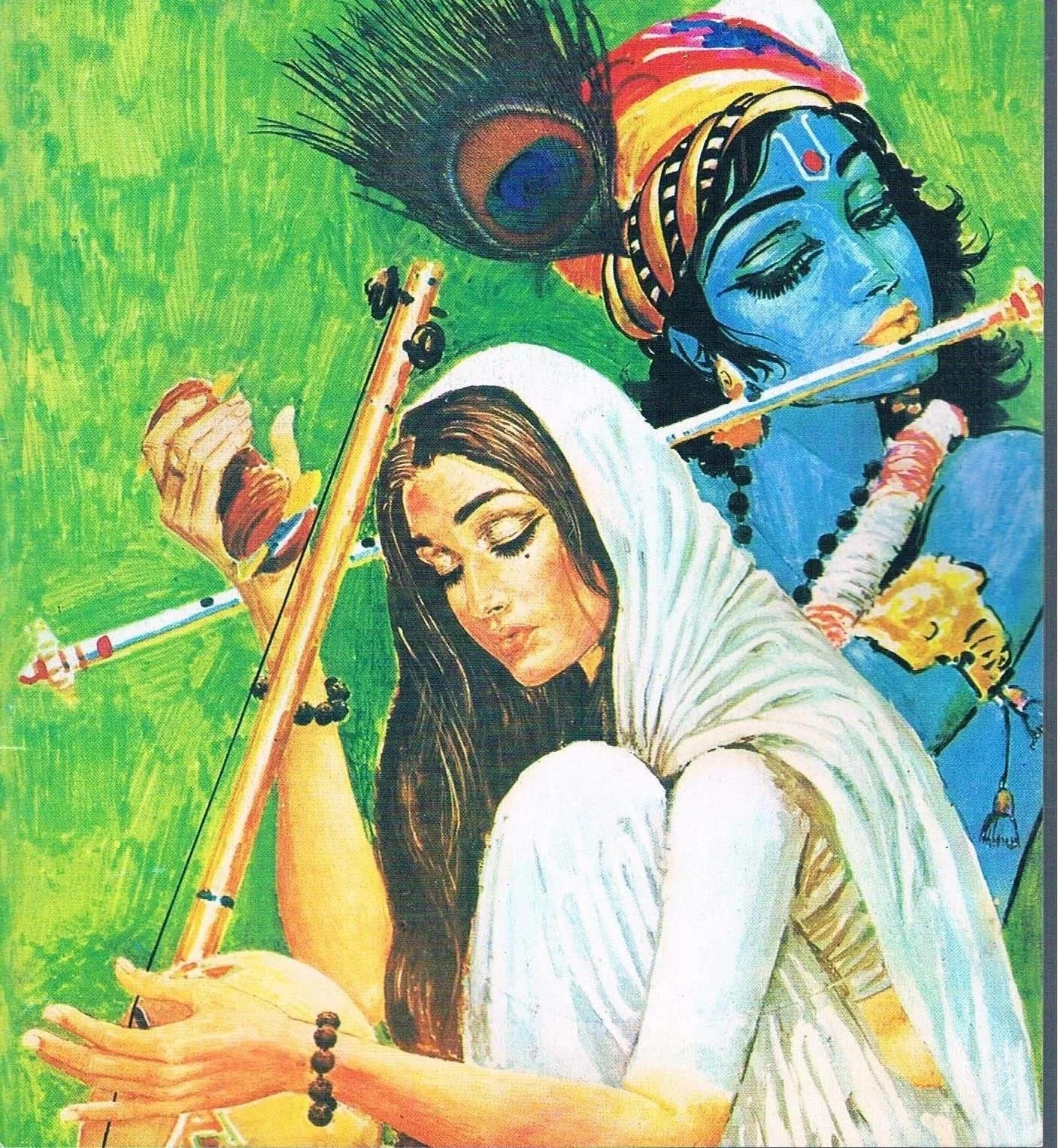
Among the towering lights of India’s bhakti movement, Sant Mirabai remains one of the most powerful and beloved voices. Born in the early 16th century in Kudki, Rajasthan, into a noble Rajput family, she was married into the royal house of Mewar. Yet, royal life fared pale to her one true love & goal in life: Her Giridhar Gopal, or Lord Krishna.
She was a steadfast woman who defied the strict expectations of palace life, choosing instead a spiritual path marked by song, surrender, and fearless devotion. Persecuted for refusing to abandon her bhajans, Mirabai eventually left the palace, wandering across North India as a poet-saint whose songs carried the fragrance of longing and liberation.
Mirabai’s poetry, composed in Rajasthani and related dialects, reflects the central bhakti idea that divine love transcends both ritual and hierarchy. Her verses embody the final stage of devotion, or Madhura Bhakti, where the devotee sees the Divine as their beloved. As scholars like John Stratton Hawley and A.J. Alston note, Mirabai’s emotional clarity and simplicity bring Krishna into the most intimate space of the devotee’s heart.
Some of her most cherished compositions include:
“Payoji Maine Ram Ratan Dhan Payo”
I have received the jewel-like wealth of the Divine Name.
“Mhara re Giridhara Gopal, Doosra Na Koya”
For me, there is only Giridhar Gopal—there is no one else..
These poems are sung not just as melodies, but as living conversations between soul and Divine.
Mirabai’s Transformative Influence on Devotional Music
Music as Her Lifelong Sadhana
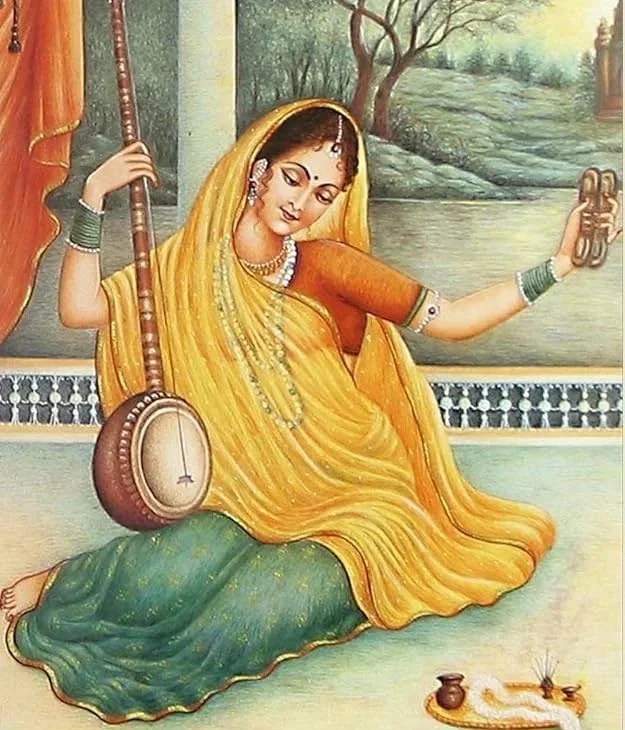
Mirabai’s influence extends far beyond literature. She transformed Indian devotional music, reshaping how bhajans are sung and emotionally experienced. She is often depicted as the wandering ascetic with an ektara, singing her songs of surrender through the streets of Vrindavan and Dwarka.
Her poems introduced an emotional intensity that blended personal longing with spiritual yearning, paving the way for later Bhakti and folk traditions. Her devotional style influenced musical cultures across Rajasthan, Gujarat, Uttar Pradesh, and beyond.
A Legacy Across Classical, Semi-Classical & Folk Traditions
Mirabai’s compositions continue to live vibrantly in the repertoires of:
Hindustani classical vocalists
Semi-classical singers
Folk and regional artists
Gharanas that reinterpret her work with fresh musical expression
Her bhajans remain staples in concert halls, satsangs, temples, and classrooms, forming a cultural bridge between professional artistry and community worship.
A Voice Beyond Barriers
Her music inspires countless singers—especially women—who see in her life a model of courage, spiritual autonomy, and devotion that transcends social boundaries.
“Mira’s appeal crosses the boundaries of gender, caste, and class. She suffers under harsh social restrictions and patriarchal brutality—an experience shared by women and men alike. She stands up for what is right and suffers bitterly for holding fast to her convictions.”
Mirabai at “Sant Vaani: The Songs of the Saints”
Sur Sangat Academy featured Mirabai as one of the central saint-poets in their December 2025 showcase titled, “Sant Vaani: The Songs of the Saints.”
Through soulful performances by our students, we explored her spiritual journey—from royal courts to temple streets, from longing to liberation—through the songs she left behind.
Alongside other great saints such as Kabir, Tukaram, and Surdas, Mirabai’s poetry helps us celebrate the timeless wisdom, devotion, and musical richness of India’s spiritual heritage.
Her bhajans remind us that music at its highest form is not entertainment but awakening—a call to remember who we truly are, and whom we truly love.
