Monsoon
Link to excerpt: https://youtu.be/yjKpZ1LC43U
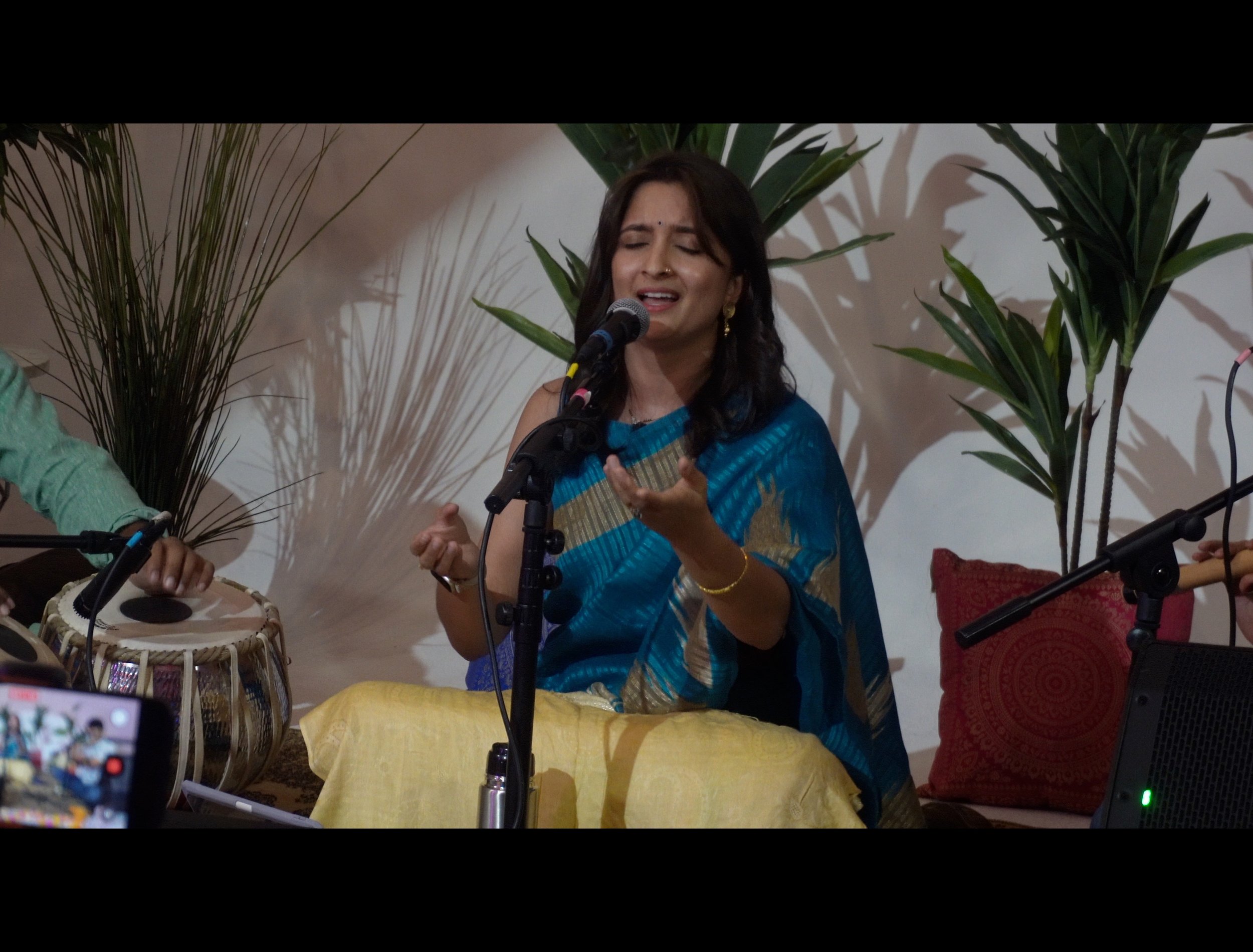
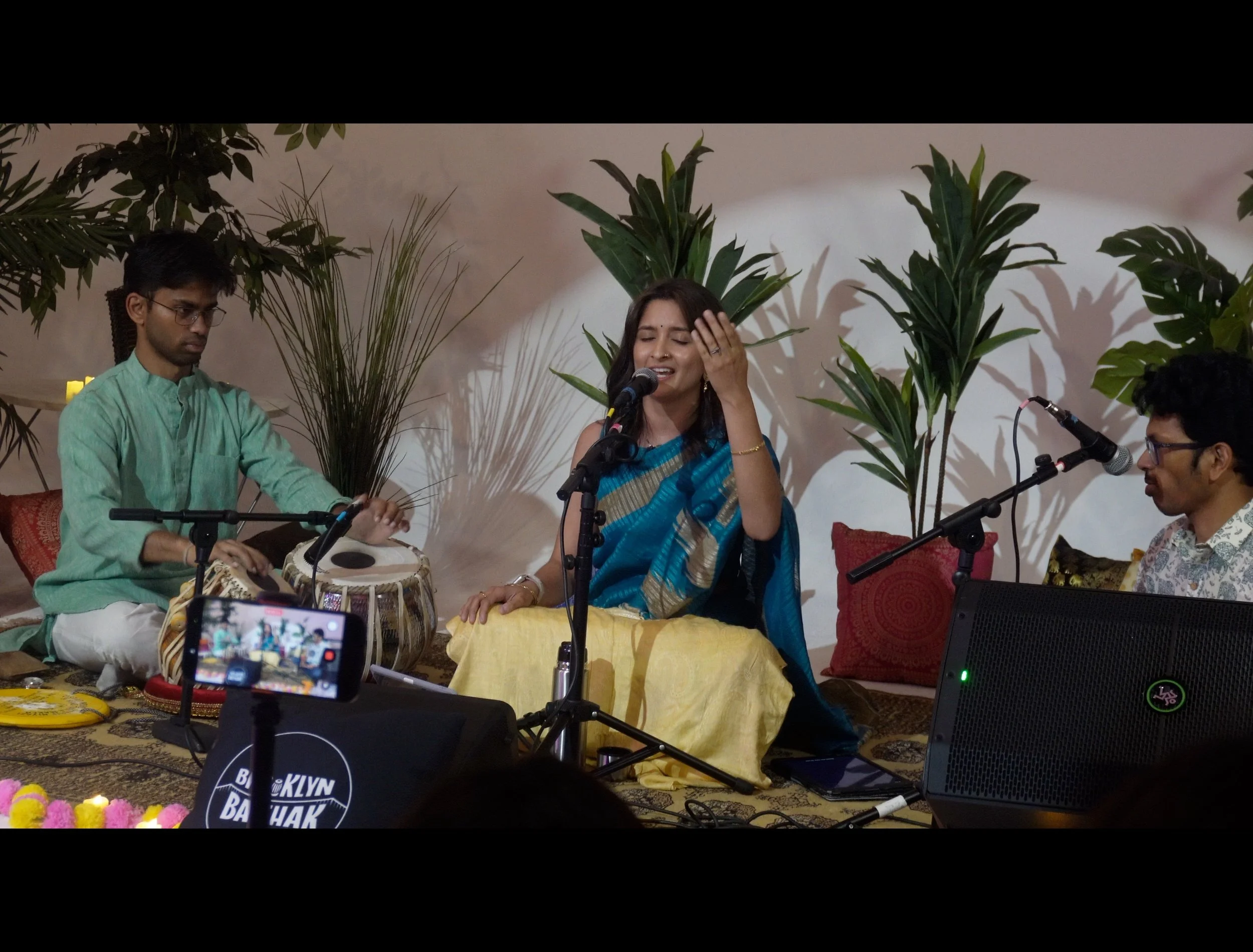
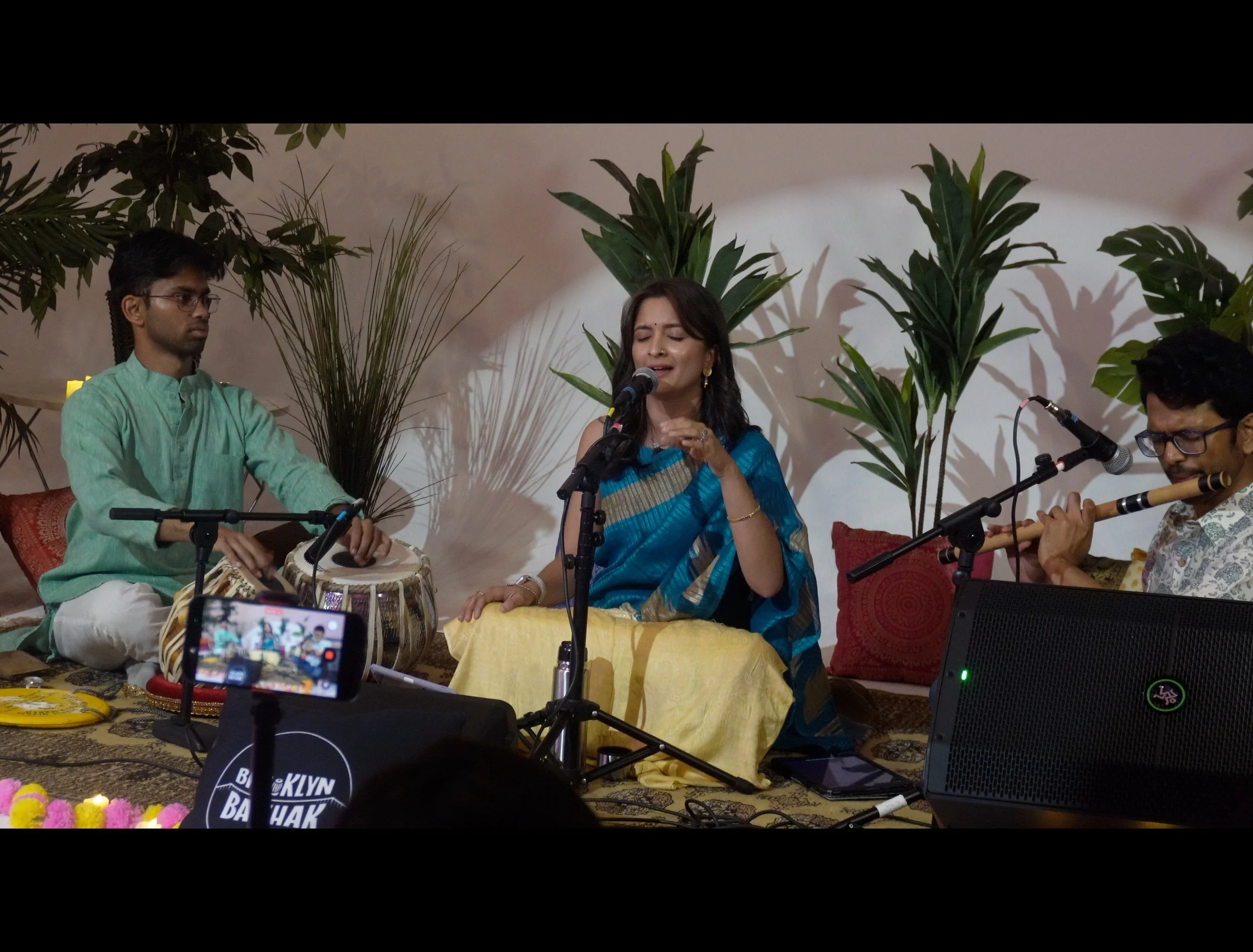
Tabla: Kushal Sahabir; Flute: Mahesh H
___________________________________________________________________________________________________
The monsoon has arrived.
A nayika finds herself surrounded by the sounds of rain, wandering in search of her Krishna. The clouds gather, peacocks begin to call, and somewhere in the distance she hears the sound of a flute. Everything around her seems to suggest that He is near. She waits for Him, searches for Him, calls for Him. But Krishna does not come.
The Monsoon
The monsoon holds a special place in the poetry and music of Krishna. It is a season of abundance and beauty, but also one of intense longing. Dark clouds recall the complexion of Shyaam, peacocks dance at the arrival of the rains, and the lush landscape of Braj becomes inseparable from stories of Krishna and Radha. For the devotee separated from Krishna, all of this beauty can make His absence feel even greater. The season becomes both a reminder of the beloved and an expression of viraha, the ache of separation.
The journey begins in the raga, unfolding slowly and without hurry. Phrases take their time to reveal themselves, lingering on certain notes before moving forward. Meend stretches the space between swaras, giving the melody the feeling of reaching for something that remains just beyond it. This is viraha, not only expressed through the poetry, but embedded within the movement of the music itself.
The opening classical composition brings the atmosphere of the monsoon into the music. Rain is not simply the setting here. Its arrival awakens something in the nayika. The season brings memories of Krishna and the possibility that He may return. The world around her begins to feel full of Him.
A peacock calls.
The music moves into Surdas' Ali Ri Govardhan Par Bole Mor. The peacock at Govardhan is another reminder of Krishna, another reason to believe that perhaps He is close. But with every sign of His presence comes the reality of His absence.
Surdas' words carry a longing that is not always gentle. There is restlessness in the search for Krishna, and even anger at a beloved who refuses to arrive. The nayika calls for Him again and again, unable to understand why the one she loves so completely remains out of sight.
And then there is the flute.
Krishna never has to appear for His presence to be felt. The flute moves in and out of the music like a distant trace of Him. At times it seems to answer her. At others, it only deepens the search. She hears the instrument so inseparable from Krishna, yet still cannot find the person holding it.
Shyaam.
His name returns again and again.
With each repetition, its meaning shifts. Shyaam is first a call, then a plea. It becomes restless, frustrated, aching. The word itself does not change, but the feeling inside it does. As the name is repeated, the search becomes less about finding Krishna somewhere in the forest and more about what happens through the act of calling for Him.
The rain, the peacock, the flute, His name. Krishna has been everywhere around her, even while remaining physically absent.
The journey of the nayika is ultimately one from longing toward surrender. She begins by searching for Krishna as someone she can see, hear and reach. But slowly, the boundary between His presence and absence begins to dissolve.
The classical and devotional traditions move together throughout this journey. The raga creates the world of the monsoon. Meend gives shape to the ache of viraha. Surdas gives voice to the devotee who loves Krishna enough to be angry with Him. The flute allows Him to enter without appearing. And the repetition of His name carries the nayika deeper and deeper into devotion.
What begins as a search for Krishna becomes an experience of being surrounded by Him.