Sangeet: A Confluence of Sound and Movement
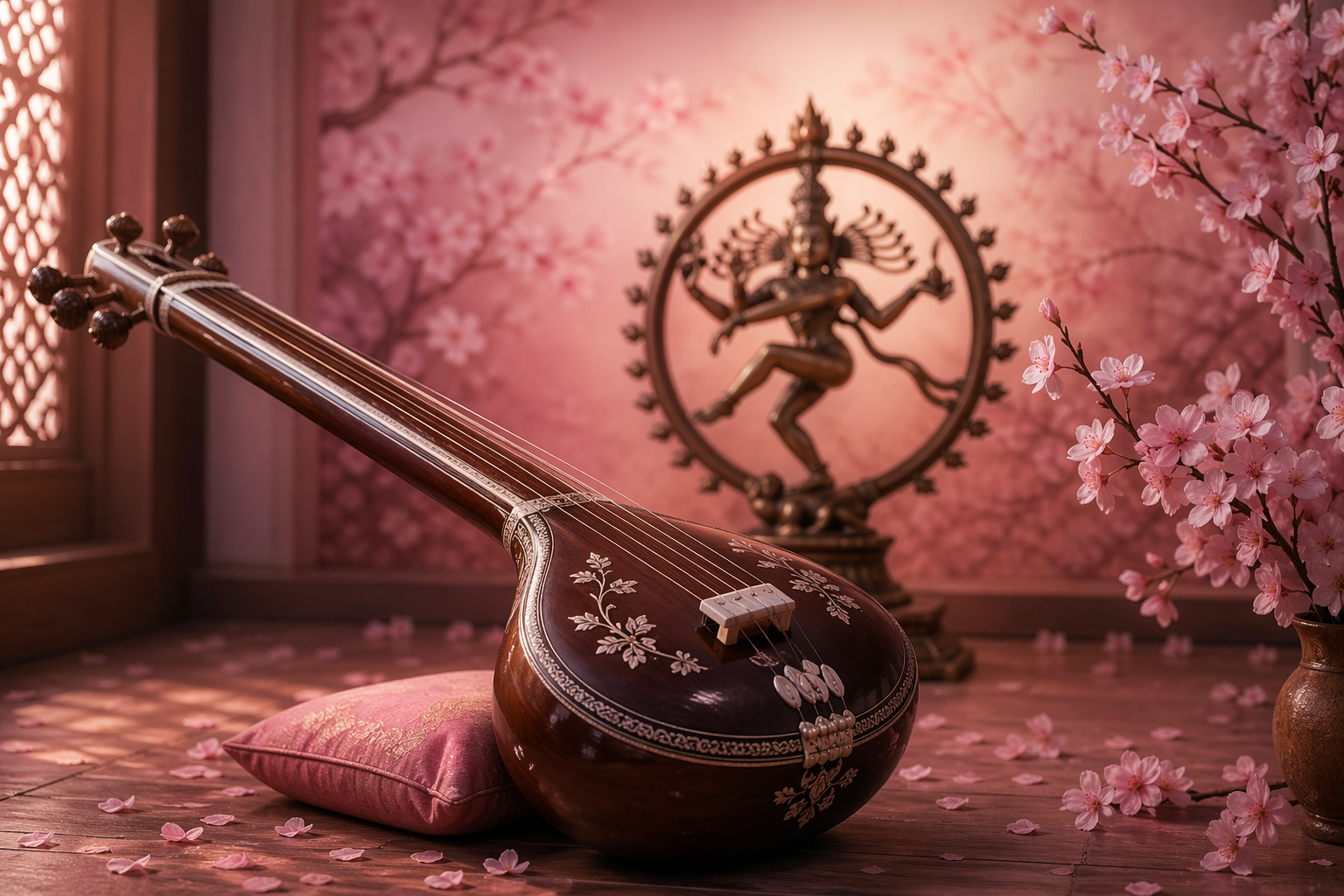
There is a beautiful idea at the heart of the Indian artistic tradition, one that gently dissolves the boundaries we often place between music and dance. It is expressed in a simple yet expansive line from the Sangita Ratnakara:
“Geetam, vadyam, tatha nrityam — trayam sangeetam uchyate.”
Vocal music, instrumental music, and dance — together are called Sangeet.
This is more than a definition. It is a way of understanding the arts themselves.
What we call Sangeet is not limited to sound. Sarangadeva (Sangita Ratnakar) presents it as a coming together of voice, instrument, and movement, each one deepening the other.
One Art, Many Expressions
The Sangita Ratnakara, often referred to as the “Ocean of Music,” emerges at a pivotal moment in history before the divergence of Hindustani and Carnatic traditions. It preserves a unified vision of Sangeet, where:
Gitam, the voice shaped by nāda and language
Vadyam, instruments extending sound into space
Nrityam, the body translating rhythm into movement
are not separate paths, but expressions of the same underlying current.
A Vedic Origin of the Performing Arts
This understanding goes back even further, to the Natyashastra, where performance itself is described as a divine synthesis:
जग्राह पाटयमृग्वेदात् सामभ्यो गीतमेव च ।
यजुर्वेदादभिनयान् रसानाथर्वणादपि ॥
He, Brahmā, drew recitative text from the Rigveda, song from the Samaveda, expressive enactment from the Yajurveda, and the experience of rasa from the Atharvaveda.
In this vision, nāṭya is not a single discipline. It is a complete and integrated creation, bringing together:
Pāṭhya, the word
Gīta, the sound
Abhinaya, the embodied expression
Rasa, the inner experience
The arts were never meant to exist in isolation. They were conceived as a unified medium, one that moves beyond language and form, toward something deeper.
Sangeet as a Complete Language
Within this framework, music and dance are not independent forms. They are connected, like beads resting on a single thread.
As Kapila Vatsyayan writes, the Natyashastra is not just a work on theatre but a comprehensive exploration of all the performing arts in India.
At its foundation, Sangeet rests on two essential principles:
Nāda, sound
Gati, movement
From these arise swara, pitch, and laya, rhythm.
Music gives form to emotion through sound.
Dance gives form to that same emotion through the body.
A note is not only heard, it is felt.
A gesture is not only seen, it carries its own music.
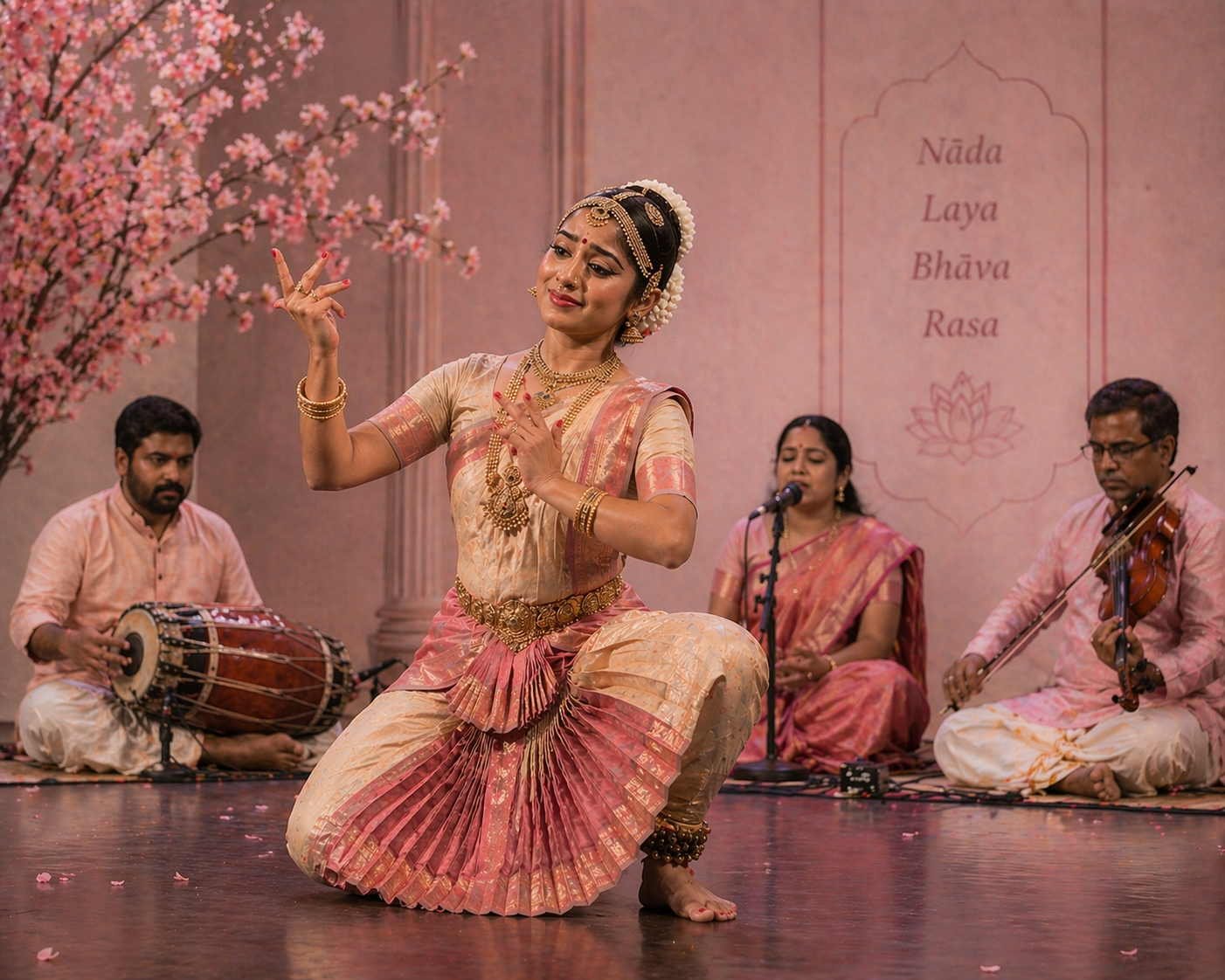
The Role of Rasa: The Soul of Sangeet
The culmination of this confluence is rasa, the aesthetic essence.
Elaborated deeply by Abhinavagupta in the Abhinavabharati, rasa is not simply emotion. It is a state of awareness, a refined experience where performer and audience meet.
In this process:
Music shapes the emotional landscape
Rhythm gives structure to time and movement
Abhinaya brings emotion into visible form
The intention behind this tradition is powerful. The arts were created as a universal medium, something that moves beyond language, beyond social hierarchy, beyond intellectual limitation. They are meant to be experienced.
Closing Reflection
To separate music from dance is to divide what was always whole.
Sangeet is not only something we hear.
It is something we witness, feel, and embody.
It is where sound becomes movement, movement becomes expression, expression becomes rasa, and rasa becomes a glimpse of the divine.
