What is a raga?
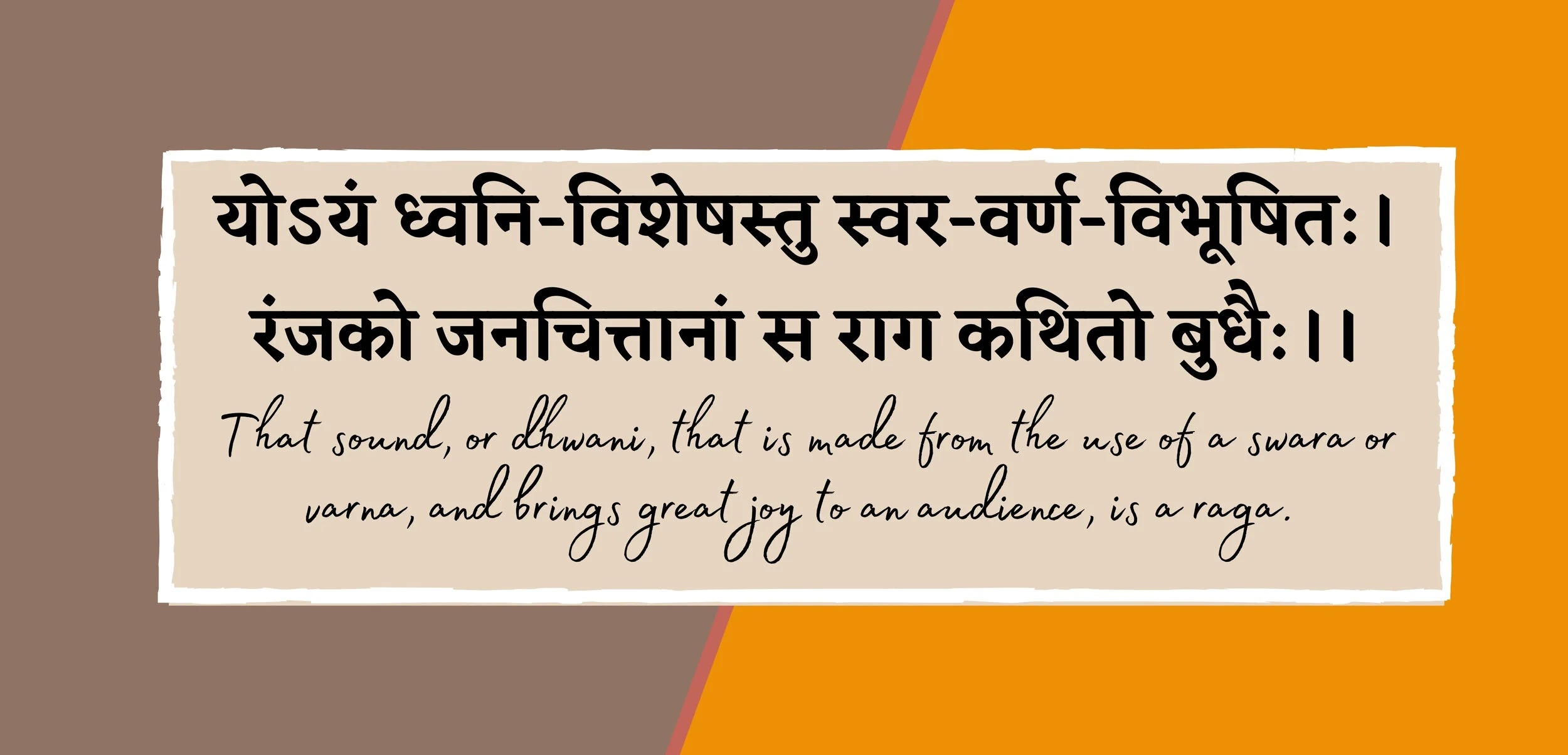
A raga is considered to be the soul of Indian classical music, whether it be Hindustani or Carnatic. It is the backbone of classical music. On paper, the structure of a raga is similar to a Western classical mode or scale. In other words, it is an ascending and descending sequence that is composed of any five to seven of the twelve swaras. However, a raga is a much more complicated structure.
A raga is dynamic, almost alive, and follows a set of rules. While a performer cannot break the rules of the raga, the presentation of a raga is heavily based on improvisation within the framework of the raga.
Notes in a raga have a special relationship with one another. Certain combinations are encouraged, while others are not allowed. This relationship between the notes in a raga, called a chalan, tells a story; it conveys an emotion and creates an atmosphere. Two ragas with the same set of notes can sound very different and tell a different story based on their chalan. The prakruti, or nature, of the raga is shown in the chalan. Is the raga peaceful? Is the raga restless? Is the raga conveying love? Is the raga showing strength? All of these various emotions are conveyed through the meticulous practice of perfecting the various relationships between notes.
Finally, a raga requires specific ornamentations. Some examples of ornamentation include kan swaras and meend. A kan swara is a grace note. It’s a subtle use of an adjacent note to further enhance the main note. A kan swara is never fully articulated; it’s like a shadow. A meend is slide between notes. Both the kan swaras and the meends contribute to swara lagaav, which is the manner in which you sing a particular note.
Structurally, a raga consists of the following lakshans, or features:
Aaroha/avroha: ascending/descending scale
Pakkad: a summarizing phrase that shows the most important combinations in a raga
Vadi/samvadi: the most important and second most important notes in the raga, respectively
Varjit: notes that are not allowed in the raga
Thaat: the family the raga belongs to (based on Pt. Bhatkhande’s classification system)
Nyas Swar: The swaras upon which the performer must rest to enhance the beauty of the raga
Jati: The number of notes used in the aaroha/avroha
Audav: 5 notes
Shadav: 6 notes
Sampurna: 7 notes
Gayan Samay: the time during which the raga is usually performed. The day is split into 8 prahars, or section: 4 in the day, 4 in the night. When the raga is sung at a given time, it has the most effect on the mahol, or atmosphere.
Raga Prakruti: The emotional characteristics of a raga, i.e gambhirta (seriousness), shanta (peacefulness), chanchalta (restlessness), etc
When a raga is perfected with the proper guidance and technique, it creates a mahol in which both the performer and the audience are connected with one another.
